Conformance EE is a Ginkgo v2-based test framework that follows a three-phase pattern: Build, Execute, and Report. It uses combinatorial scenario generation, SHA-256 deduplication, and parallel execution to efficiently validate KKP cluster configurations.
High-Level Architecture
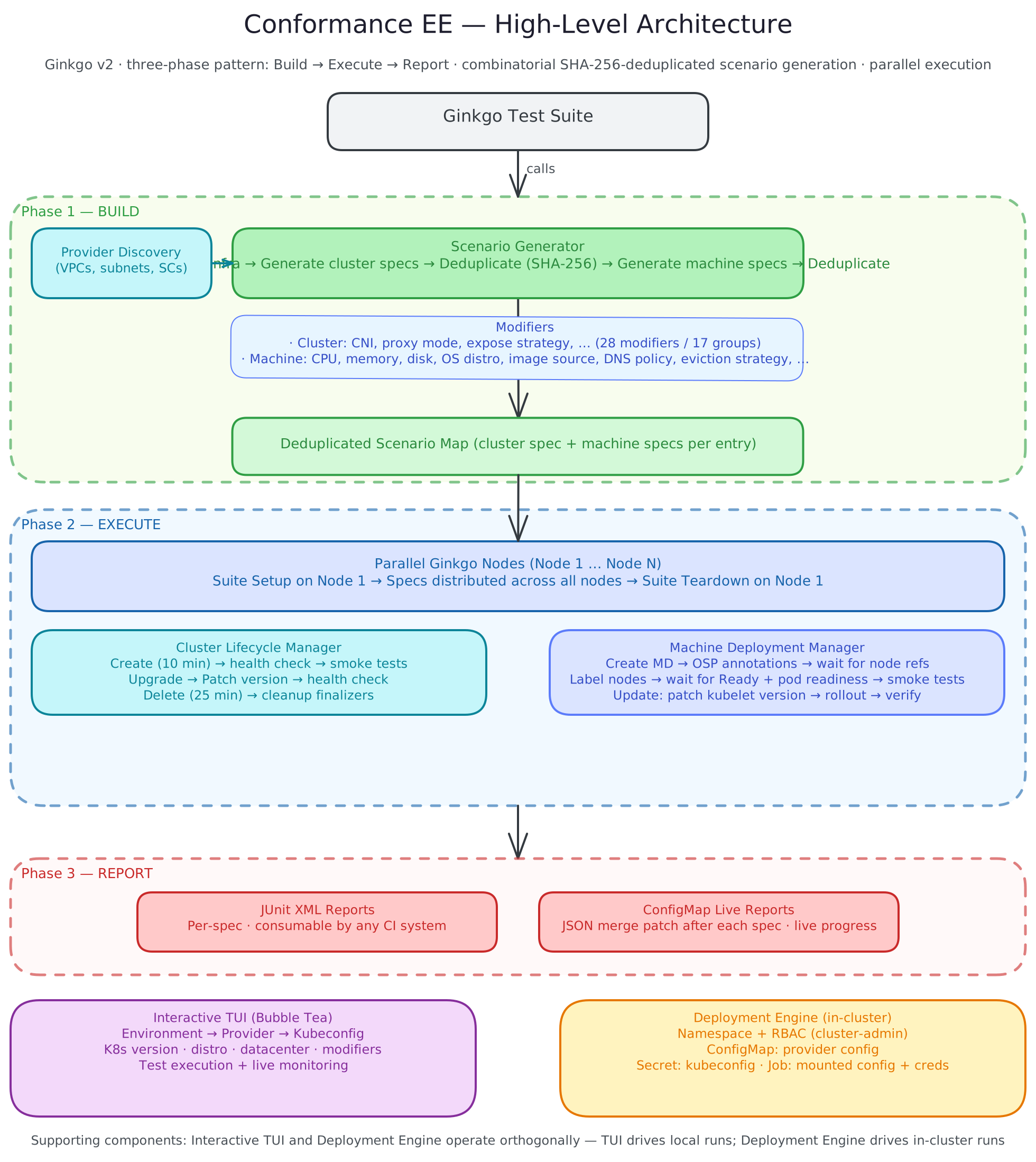
Three-Phase Pattern
1. Build Phase
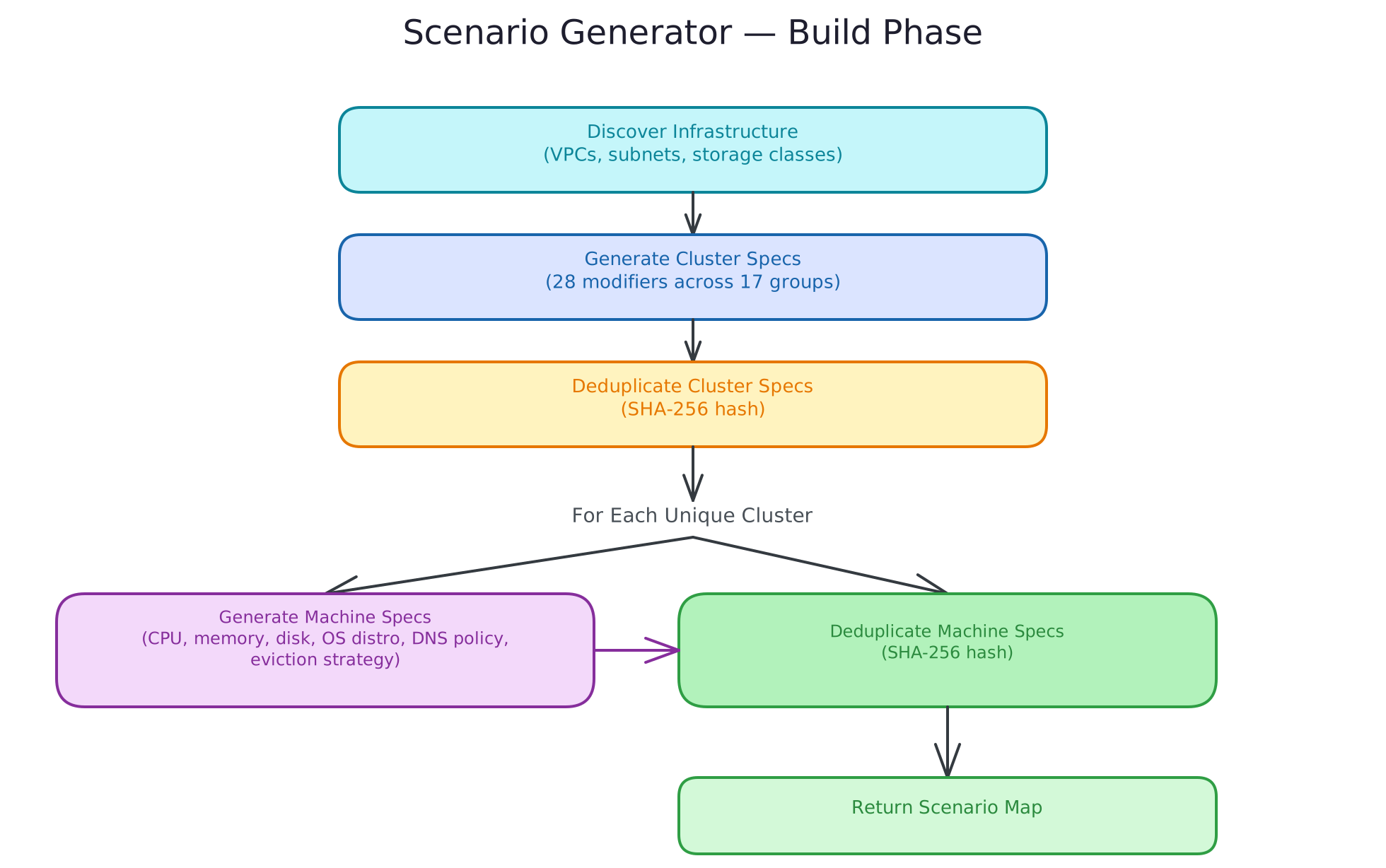
The scenario generator produces the complete test matrix before any test spec runs:
- Discover Infrastructure — Queries the cloud provider to enumerate VPCs, subnets, storage classes, instance types, etc. from the live infrastructure cluster.
- Generate Cluster Specs — Combinatorially applies cluster modifiers (CNI, proxy mode, expose strategy, etc.) and datacenter modifiers (network, storage class).
- Deduplicate Cluster Specs — Serializes each sanitized cluster spec, hashes with SHA-256, and uses a composite key to identify truly distinct clusters.
- Generate Machine Specs — For each unique cluster, combinatorially applies machine modifiers (CPU, memory, disk, OS distribution, image source, DNS policy, eviction strategy, etc.).
- Deduplicate Machine Specs — Same SHA-256 approach applied to machine specs.
The result is a deduplicated map of scenarios where each entry contains the cluster spec plus all machines to test against it.
2. Execute Phase
Test scenarios are executed in parallel across Ginkgo nodes:
- Suite Setup: Expensive one-time operations (project creation, cluster setup) run only on the first parallel Ginkgo node. Results are shared to all nodes.
- Spec Execution: Each Ginkgo node picks up specs from the scenario table and runs the full machine deployment lifecycle.
- Suite Teardown: Cluster deletion and report publishing run only on the first node after all others finish.
3. Report Phase
- JUnit XML: Per-spec JUnit XML files written to the reports directory, consumable by any CI system.
- ConfigMap Live Reporting: After each spec, results are patched into a shared Kubernetes ConfigMap using JSON merge patches for live visibility into test progress.
Components
Scenario Generator
The scenario generator is the core engine that produces the test matrix. It uses concurrent workers to parallelize cluster and machine spec generation:
Cluster Lifecycle Manager
Handles the full lifecycle of KKP clusters:
- Creation: Create cluster resource, wait for reconciliation (10 min), validate control plane health, add cleanup finalizers, run smoke tests
- Upgrade: Patch Kubernetes version, wait for reconciliation, re-run health checks
- Deletion: Delete with 25 min timeout, wait for cleanup finalizer-based PV/LB deletion
Machine Deployment Manager
Manages machine deployments within user clusters:
- Setup: Create MachineDeployment, attach OSP annotations, wait for node references, label nodes, wait for Ready state and pod readiness
- Update: Patch kubelet version, wait for rollout, verify new nodes
Interactive TUI
A Bubble Tea-based terminal interface that guides users through:
- Environment selection (local or existing cluster)
- Provider selection (currently KubeVirt)
- Kubeconfig and credential configuration
- Kubernetes version, distribution, datacenter, and modifier selection
- Test execution and live monitoring
Deployment Engine
Creates Kubernetes resources for in-cluster test execution:
- Kubernetes client setup from kubeconfig
- Namespace and RBAC (cluster-admin) creation
- ConfigMap for provider configuration
- Secret for kubeconfig credentials
- Job definition with mounted config and credentials